
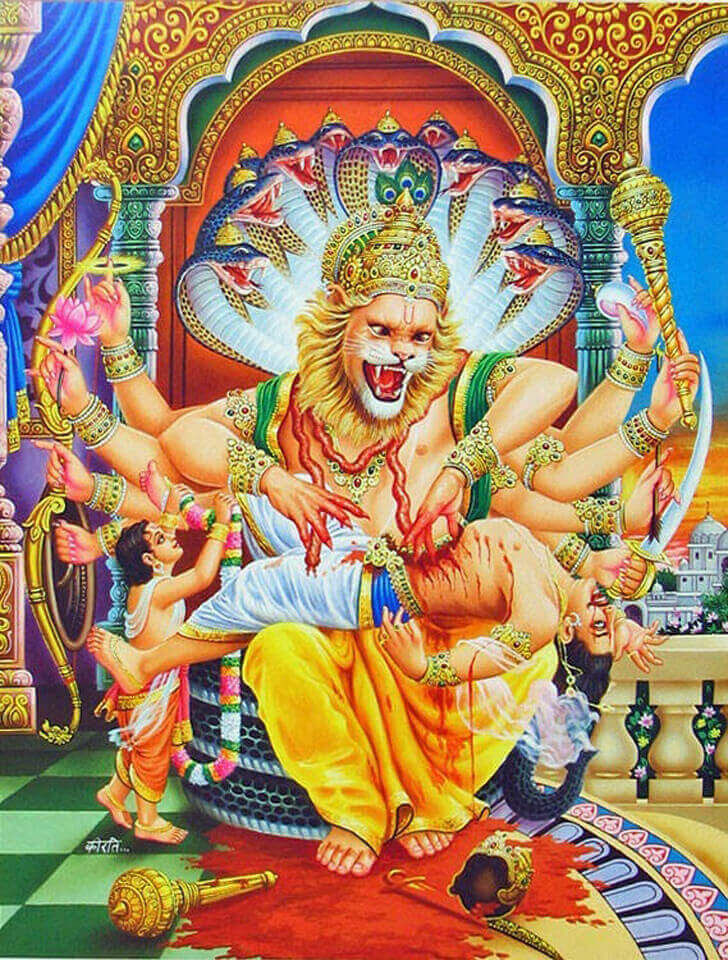
Lord Vishnu appeared in the form of Narasimha in his fourth avatar. He took this avatar to kill the demon king Hiranyakashipu. Narasimha is described as having a human body with a lion-like face and claws. The Bhagavata Purana mentions that as Varaha, Lord Vishnu killed Hiranyaksha, and as Narasimha, he killed his brother Hiranyakashipu. The story goes as follows:
Hiranyakashipu, the elder brother of Hiranyaksha, wanted revenge on Lord Vishnu for his brother's death. He performed rigorous penance, and after many years Lord Brahma granted him a boon that made him almost immortal: he could not be killed by a man, a beast, a god, or a demon. He could not die by night or by day. Not by steel, wood, or stone, not indoors or outdoors, not on earth or in the sky; Hiranyakashipu could die nowhere and by no one.
After receiving this boon, Hiranyakashipu became a dictator and an oppressor who ruled over everything. Hiranyakashipu and his wife Kayadhu had a son, Prahlada, who grew up to become a passionate devotee of Lord Vishnu. The king made many attempts to kill Prahlada, the best known being when he had Prahlada sit in a fire with his sister Holika. Prahlada survived every attempt. At last the king challenged Prahlada to prove his devotion. Prahlada said that Lord Vishnu is everywhere, so the king pointed to a pillar of his palace and asked whether Vishnu was in it. When Prahlada said yes, the infuriated king struck the pillar. With a thundering sound, Narasimha, the avatar of Lord Vishnu, burst out of the pillar. (In a popular telling, the king heats an iron pillar and asks Prahlada to embrace it, and the pillar does not burn him.)
Narasimha had the body of a human being, but his face was that of a lion, and he had claws. This happened at dusk, which was neither day nor night. Narasimha sat on the threshold of the court hall, which was neither inside nor outside, and plunged his nails into Hiranyakashipu's body, tearing his body and stomach apart and killing the demon. Prahlada's faith in Lord Vishnu was honoured, and the world was protected from the demon.
Iconography: The Forms of Narasimha
Narasimha has the face and mane of a lion and the body of a man, usually with four or more arms. Temple tradition worships him in several forms:
- Ugra Narasimha: the fierce form, often shown with Hiranyakashipu across his lap as he tears the demon apart with his claws.
- Yoga Narasimha: seated calmly in meditation, with a yoga band around his knees.
- Lakshmi Narasimha: the peaceful, blessing form, with Goddess Lakshmi seated on his lap.
The child Prahlada is often shown standing nearby with folded hands.
Symbolism and Lessons of the Narasimha Avatar
Narasimha appeared in the Satya Yuga, and his story is one of the clearest examples of the Lord protecting a true devotee.
- Faith over fear: Prahlada was only a child, yet his trust in Lord Vishnu did not break under his father's threats.
- The Lord is everywhere: Prahlada believed Lord Vishnu was present everywhere, even in a pillar, and the Lord came out of the pillar to honour that faith.
- No loophole for evil: Hiranyakashipu's boon seemed perfect, yet Narasimha met every condition. He was neither man nor beast, he came at twilight, he sat on a threshold, he used his claws rather than a weapon, and he held the demon on his lap, which is neither earth nor sky.
- Fierce only to protect: according to the Bhagavata Purana, the Lord's fury was calmed by Prahlada's gentle prayers, showing that his fierce form exists to protect the good.
Temples, Narasimha Jayanti and Thursday Worship
Ahobilam in Andhra Pradesh is traditionally believed to be the place where Narasimha appeared, and it has nine Narasimha shrines known as the Nava Narasimha. At Simhachalam near Visakhapatnam, the deity is covered in sandalwood paste for most of the year, and the original form is seen only once a year during the Chandanotsavam festival on Akshaya Tritiya. The Yadagirigutta temple in Telangana is another major pilgrimage centre.
Narasimha Jayanti falls on the Chaturdashi (fourteenth day) of the bright fortnight of Vaishakha. Since the Lord appeared at dusk, the main puja is performed in the evening at sandhya time, and devotees keep a fast on this day. Holi is also linked to this story: the bonfire of Holika Dahan recalls how Prahlada survived the fire while his aunt Holika was burnt.
On Thursdays, devotees facing fear or hardship may read the story of Prahlada and Narasimha along with the Brihaspativar vrat katha. Chanting "Om Namo Bhagavate Narasimhaya" and offering yellow flowers and jaggery to Lord Vishnu is a simple way to include Narasimha in Thursday worship.
भगवान विष्णु अपने चौथे अवतार में नरसिंह के रूप में प्रकट हुए। वे राक्षस राजा हिरण्यकशिपु का वध करने के लिए इस अवतार में अवतरित हुए थे। नरसिंह का वर्णन शेर जैसे चेहरे और पंजों वाले मानव शरीर के रूप में किया गया है। भागवत पुराण में उल्लेख है कि भगवान विष्णु ने वराह के रूप में हिरण्याक्ष का और नरसिंह के रूप में उसके भाई हिरण्यकशिपु का वध किया। गाथा इस प्रकार है।
हिरण्याक्ष का बड़ा भाई हिरण्यकशिपु अपने भाई की मृत्यु के लिए भगवान विष्णु से बदला लेना चाहता था। उसने कठोर तपस्या की, और कई वर्षों के बाद भगवान ब्रह्मा ने उसे ऐसा वरदान दिया जिससे वह लगभग अमर हो गया: उसे न कोई मनुष्य मार सकेगा, न कोई पशु, न कोई देवता और न कोई दानव। वह न रात में मर सकता था, न दिन में। न लोहे से, न लकड़ी से, न पत्थर से, न घर के अंदर, न बाहर, न पृथ्वी पर, न आकाश में, हिरण्यकशिपु कहीं भी और किसी के द्वारा भी मर नहीं सकता था।
यह वरदान पाने के बाद हिरण्यकशिपु एक तानाशाह और अत्याचारी बन गया, जो हर चीज़ पर शासन करता था। हिरण्यकशिपु की पत्नी कयाधु ने प्रह्लाद नामक एक पुत्र को जन्म दिया, जो बड़ा होकर भगवान विष्णु का अनन्य भक्त बना। राजा ने प्रह्लाद को मारने के अनेक प्रयत्न किए, जिनमें सबसे प्रसिद्ध वह घटना है जब उसने प्रह्लाद को अपनी बहन होलिका के साथ अग्नि में बिठाया। प्रह्लाद हर प्रयास में बच गया। अंत में राजा ने प्रह्लाद को अपनी भक्ति साबित करने की चुनौती दी। प्रह्लाद ने कहा कि भगवान विष्णु सर्वत्र हैं, तो राजा ने अपने महल के एक खंभे की ओर संकेत करके पूछा कि क्या विष्णु इसमें भी हैं। प्रह्लाद के हाँ कहने पर क्रोधित राजा ने खंभे पर प्रहार किया। भीषण गर्जना के साथ भगवान विष्णु के अवतार नरसिंह खंभे से प्रकट हुए। (एक लोकप्रिय कथा के अनुसार राजा ने लोहे के खंभे को गर्म करके प्रह्लाद से उससे लिपटने को कहा, और खंभे ने उसे नहीं जलाया।)
नरसिंह का शरीर मनुष्य का था, लेकिन उनका चेहरा शेर का था और उनके पंजे थे। यह घटना संध्या के समय हुई, जो न तो दिन था और न ही रात। नरसिंह राजसभा की दहलीज पर बैठे, जो न तो अंदर थी और न ही बाहर, और उन्होंने अपने नाखून हिरण्यकशिपु के शरीर में गड़ा दिए, उसके शरीर और पेट को फाड़ दिया और राक्षस को मार डाला। भगवान विष्णु में प्रह्लाद की आस्था का मान रखा गया, और दुनिया एक राक्षस से सुरक्षित हो गई।
नरसिंह अवतार के स्वरूप
नरसिंह भगवान का मुख और अयाल सिंह के होते हैं और शरीर मनुष्य का, जिसमें प्रायः चार या उससे अधिक भुजाएँ होती हैं। मंदिरों की परंपरा में उनकी पूजा कई रूपों में की जाती है:
- उग्र नरसिंह: उनका उग्र रूप, जिसमें प्रायः हिरण्यकशिपु को उनकी गोद में दिखाया जाता है और वे अपने नखों से उस दानव को चीर रहे होते हैं।
- योग नरसिंह: ध्यान में शांत बैठे हुए, घुटनों के चारों ओर योगपट्ट बँधा हुआ।
- लक्ष्मी नरसिंह: उनका शांत और आशीर्वाद देने वाला रूप, जिसमें देवी लक्ष्मी उनकी गोद में विराजमान होती हैं।
बालक प्रह्लाद को अक्सर पास में हाथ जोड़े खड़ा दिखाया जाता है।
नरसिंह अवतार का प्रतीकात्मक अर्थ और शिक्षा
नरसिंह भगवान सतयुग में प्रकट हुए थे, और उनकी कथा भगवान द्वारा सच्चे भक्त की रक्षा का सबसे स्पष्ट उदाहरण मानी जाती है।
- भय पर आस्था की विजय: प्रह्लाद केवल एक बालक था, फिर भी पिता की धमकियों के आगे भगवान विष्णु पर उसका विश्वास नहीं टूटा।
- भगवान सर्वत्र हैं: प्रह्लाद का विश्वास था कि भगवान विष्णु हर जगह हैं, खंभे में भी, और भगवान ने खंभे से प्रकट होकर उस आस्था का मान रखा।
- बुराई के लिए कोई बचाव नहीं: हिरण्यकशिपु का वरदान अचूक लगता था, फिर भी नरसिंह ने हर शर्त का पालन किया। वे न मनुष्य थे न पशु, वे संध्या के समय आए, दहलीज पर बैठे, शस्त्र के बजाय नखों का प्रयोग किया और दानव को अपनी गोद में रखा, जो न पृथ्वी है न आकाश।
- उग्रता केवल रक्षा के लिए: भागवत पुराण के अनुसार प्रह्लाद की कोमल स्तुति से भगवान का क्रोध शांत हुआ। इससे पता चलता है कि उनका उग्र रूप सज्जनों की रक्षा के लिए है।
मंदिर, नरसिंह जयंती और गुरुवार की पूजा
परंपरा के अनुसार आंध्र प्रदेश का अहोबिलम वह स्थान है जहाँ नरसिंह भगवान प्रकट हुए थे। यहाँ नौ नरसिंह मंदिर हैं, जिन्हें नव नरसिंह कहा जाता है। विशाखापत्तनम के पास सिंहाचलम में भगवान की प्रतिमा वर्ष के अधिकांश समय चंदन के लेप से ढकी रहती है, और उनका मूल रूप वर्ष में केवल एक बार अक्षय तृतीया पर चंदनोत्सव के समय दिखाई देता है। तेलंगाना का यादगिरिगुट्टा मंदिर भी एक प्रमुख तीर्थ है।
नरसिंह जयंती वैशाख मास के शुक्ल पक्ष की चतुर्दशी को मनाई जाती है। भगवान संध्या के समय प्रकट हुए थे, इसलिए मुख्य पूजा शाम को संध्या काल में की जाती है, और भक्त इस दिन व्रत रखते हैं। होली का त्योहार भी इसी कथा से जुड़ा है: होलिका दहन की अग्नि याद दिलाती है कि प्रह्लाद आग से सुरक्षित बच गया, जबकि उसकी बुआ होलिका जल गई।
गुरुवार को भय या कठिनाई का सामना कर रहे भक्त बृहस्पतिवार व्रत कथा के साथ प्रह्लाद और नरसिंह भगवान की कथा भी पढ़ सकते हैं। "ॐ नमो भगवते नरसिंहाय" का जाप करना और भगवान विष्णु को पीले फूल और गुड़ अर्पित करना गुरुवार की पूजा में नरसिंह भगवान को शामिल करने का एक सरल तरीका है।