

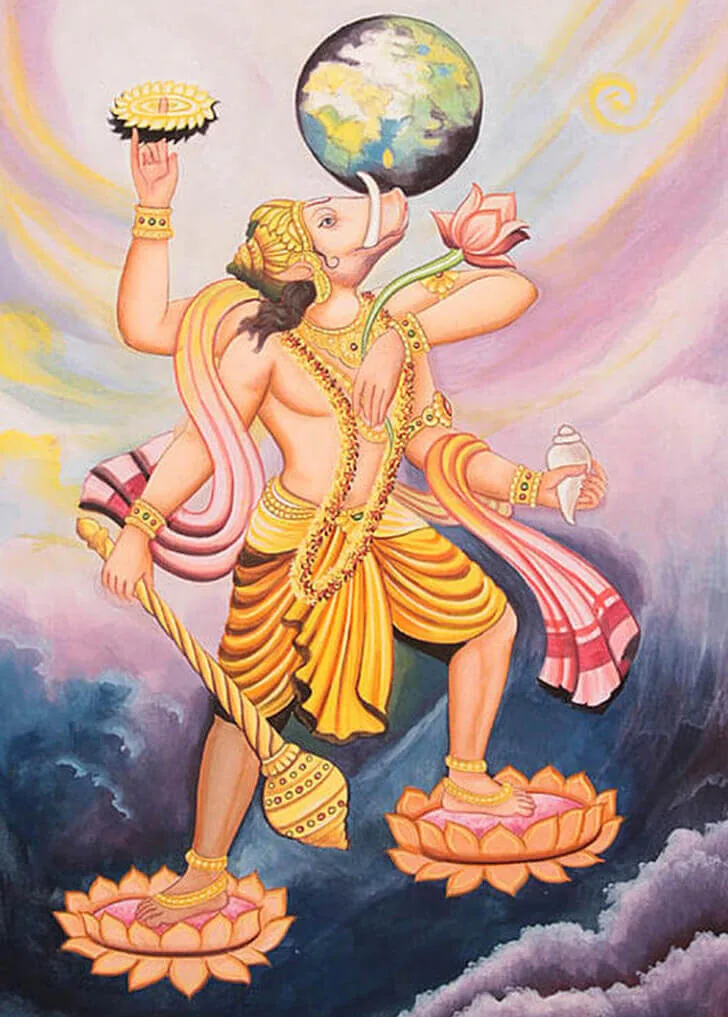
Lord Vishnu's third incarnation was in the form of Varaha, the boar. Varaha is one of the Dashavataras of Lord Vishnu. Varaha signifies the restoration of the earth and the founding of a new age. According to the Vishnu Purana, Varaha is regarded as the eternal sustainer of the earth. He is considered the divine and supreme being who brings order amid the turmoil of the world.
According to the Puranic scriptures of Hindu mythology, the story is as follows. Jaya and Vijaya, the guards of Vaikuntha, Lord Vishnu's abode, were cursed by the four Kumaras to be born as demons on earth. They were born as Hiranyakashipu and Hiranyaksha to Kashyapa and his wife, Diti. They belonged to a race of demons called the Daityas. Both demon brothers were pure evil and created chaos and havoc everywhere.
According to the Bhagavata Purana, Hiranyakashipu was the elder brother and Hiranyaksha the younger. Hiranyaksha practised rigorous meditation and, as a result, was blessed by Lord Brahma with a boon that made him immune to attacks by humans or animals. He was at war with the gods. He dragged the earth into the depths of the primordial waters. Some Puranas say that the earth cried out in pain; others say that she took the form of a cow and asked Lord Vishnu to protect her from the demon. Hiranyaksha had not included the boar in the list of animals that could not kill him. Therefore, Lord Vishnu came as Varaha, the boar with enormous tusks, and dived into the ocean.
Varaha confronted the demon Hiranyaksha and challenged him to battle. The demon mocked Varaha and tried to stop him from saving the earth. Varaha lifted the earth on his tusks and, when the demon kept harassing him, killed him after a thousand-year battle. After this, Varaha rose from the ocean with the earth on his tusks and placed her gently in her original position.
Iconography: How Varaha Is Depicted
Varaha appears in two main forms. As a full boar, he is sometimes carved with small figures of gods and sages covering his body, as in the large stone boar at Khajuraho. In the more common form, known as Bhu Varaha or Adi Varaha, he has the head of a boar and the body of a man, and holds Bhudevi, the earth goddess, on his tusk, arm or shoulder.
In his four-armed form he carries the conch and the discus. One of the most famous Varaha sculptures in India is the large rock-cut relief at the Udayagiri Caves near Vidisha in Madhya Pradesh, which shows him raising the earth out of the waters.
Symbolism and Lessons of the Varaha Avatar
Varaha is also called Yajna Varaha, because the Puranas describe the parts of his body as the parts of a sacrifice (yajna). Devotees honour him as the protector and rescuer of the earth.
- Care for the earth: the Lord dived into the deepest waters to rescue Bhudevi. Many devotees see this as a call to respect the land that feeds and supports us.
- Pride leaves a gap: Hiranyaksha believed his boon made him safe, but in his arrogance he forgot the boar. No boon protects wrongdoing for ever.
- The Lord answers a sincere call: when the earth cried out for help, Lord Vishnu came to her rescue.
Temples, Varaha Jayanti and Thursday Worship
At Tirumala in Andhra Pradesh, the Sri Bhu Varaha Swamy Temple stands beside the Swami Pushkarini tank. According to tradition, pilgrims have darshan of Varaha Swamy before visiting Lord Venkateswara, because the sacred hill is believed to be Varaha's own place. Other well-known shrines include the Bhu Varaha Swamy Temple at Srimushnam in Tamil Nadu and the Varaha Lakshmi Narasimha Temple at Simhachalam in Andhra Pradesh.
Varaha Jayanti is celebrated in the bright fortnight of the month of Bhadrapada. Devotees fast, bathe and decorate the image of the Lord, and recite the Vishnu Sahasranama.
On Thursdays, devotees of Lord Vishnu remember Varaha as the one who restored order to the world. Thursday is also the day of Brihaspati, the guru of the gods, and families pray on this day for wisdom and stability at home. A simple practice is to light a ghee lamp, offer yellow flowers and chana dal to Lord Vishnu, read the Varaha story and chant "Om Namo Bhagavate Vasudevaya".
भगवान विष्णु का तीसरा अवतार वराह (सूअर) के रूप में हुआ था। वराह भगवान विष्णु के दशावतारों में से एक हैं। वराह पृथ्वी की पुनर्स्थापना और नए युग की स्थापना के प्रतीक हैं। विष्णु पुराण के अनुसार वराह को पृथ्वी का शाश्वत पालनकर्ता माना जाता है। उन्हें दिव्य और सर्वोच्च सत्ता माना जाता है, जो दुनिया की उथल-पुथल के बीच व्यवस्था स्थापित करते हैं।
हिंदू पौराणिक कथाओं के अनुसार वराह से जुड़ी गाथा इस प्रकार है। भगवान विष्णु के निवास वैकुंठ के द्वारपालों जय और विजय को चार कुमारों ने पृथ्वी पर राक्षसों के रूप में जन्म लेने का श्राप दिया था। वे हिरण्यकशिपु और हिरण्याक्ष के रूप में कश्यप और उनकी पत्नी दिति के यहाँ पैदा हुए। दोनों दैत्य भाई अत्यंत दुष्ट थे और चारों ओर अराजकता और उत्पात मचा रहे थे।
भागवत पुराण के अनुसार हिरण्यकशिपु बड़ा भाई था और हिरण्याक्ष छोटा। हिरण्याक्ष ने कठोर तपस्या की और परिणामस्वरूप उसे भगवान ब्रह्मा से एक वरदान प्राप्त हुआ, जिसके कारण मनुष्यों या जानवरों का कोई भी हमला उस पर असर नहीं कर सकता था। वह देवताओं से युद्ध कर रहा था। वह पृथ्वी को आदिम जल की गहराइयों में ले गया। कुछ पुराणों में कहा गया है कि पृथ्वी पीड़ा से रो पड़ी; अन्य पुराणों के अनुसार उसने एक गाय का रूप लिया और भगवान विष्णु से दानव से अपनी रक्षा करने का अनुरोध किया। वरदान माँगते समय हिरण्याक्ष ने उन जानवरों की सूची में सूअर को शामिल नहीं किया था, जो उसे मार नहीं सकते थे। इसलिए भगवान विष्णु विशाल दाँतों वाले वराह के रूप में आए और समुद्र में डुबकी लगाई।
वराह ने राक्षस हिरण्याक्ष का सामना किया और उसे युद्ध के लिए चुनौती दी। दानव ने वराह का मज़ाक उड़ाया और पृथ्वी को बचाने से उन्हें रोकने का प्रयास किया। वराह ने पृथ्वी को अपने दाँतों पर उठा लिया, और जब दानव उन्हें लगातार परेशान करता रहा, तो एक हज़ार साल की लड़ाई के बाद उन्होंने हिरण्याक्ष को मार डाला। इसके बाद वराह पृथ्वी को अपने दाँतों पर उठाए समुद्र से बाहर निकले और उसे धीरे से उसकी मूल स्थिति में रख दिया।
वराह अवतार का स्वरूप
वराह अवतार के दो मुख्य रूप हैं। पूर्ण वराह (सूअर) के रूप में उनके शरीर पर कभी-कभी देवताओं और ऋषियों की छोटी-छोटी आकृतियाँ उकेरी जाती हैं, जैसे खजुराहो की विशाल पाषाण वराह प्रतिमा में। अधिक प्रचलित रूप भू वराह या आदि वराह कहलाता है, जिसमें उनका मुख वराह का और शरीर मनुष्य का होता है, और वे पृथ्वी देवी भूदेवी को अपने दाँत, भुजा या कंधे पर उठाए रहते हैं।
चार भुजाओं वाले रूप में वे शंख और चक्र धारण करते हैं। भारत की सबसे प्रसिद्ध वराह प्रतिमाओं में से एक मध्य प्रदेश में विदिशा के पास उदयगिरि की गुफाओं में चट्टान पर उकेरी गई विशाल मूर्ति है, जिसमें वे पृथ्वी को जल से बाहर निकालते हुए दिखाई देते हैं।
वराह अवतार का प्रतीकात्मक अर्थ और शिक्षा
वराह को यज्ञ वराह भी कहा जाता है, क्योंकि पुराणों में उनके शरीर के अंगों को यज्ञ के अंगों के रूप में वर्णित किया गया है। भक्त उन्हें पृथ्वी के रक्षक और उद्धारकर्ता के रूप में पूजते हैं।
- पृथ्वी के प्रति आदर: भगवान ने भूदेवी को बचाने के लिए सबसे गहरे जल में डुबकी लगाई। अनेक भक्त इसे उस धरती का सम्मान करने का संदेश मानते हैं, जो हमारा पालन-पोषण करती है।
- अहंकार में चूक: हिरण्याक्ष को लगा कि उसका वरदान उसे सुरक्षित रखेगा, लेकिन अहंकार में वह वराह को भूल गया। कोई भी वरदान बुरे कर्मों की सदा रक्षा नहीं कर सकता।
- सच्ची पुकार का उत्तर: जब पृथ्वी ने सहायता के लिए पुकारा, तो भगवान विष्णु उसकी रक्षा के लिए आए।
मंदिर, वराह जयंती और गुरुवार की पूजा
आंध्र प्रदेश के तिरुमला में स्वामी पुष्करिणी सरोवर के पास श्री भू वराह स्वामी मंदिर स्थित है। परंपरा के अनुसार तीर्थयात्री भगवान वेंकटेश्वर के दर्शन से पहले वराह स्वामी के दर्शन करते हैं, क्योंकि यह पवित्र पहाड़ी वराह भगवान का अपना स्थान मानी जाती है। अन्य प्रसिद्ध मंदिरों में तमिलनाडु के श्रीमुष्णम का भू वराह स्वामी मंदिर और आंध्र प्रदेश के सिंहाचलम का वराह लक्ष्मी नरसिंह मंदिर शामिल हैं।
वराह जयंती भाद्रपद मास के शुक्ल पक्ष में मनाई जाती है। इस दिन भक्त व्रत रखते हैं, भगवान की प्रतिमा को स्नान कराकर सजाते हैं और विष्णु सहस्रनाम का पाठ करते हैं।
गुरुवार को भगवान विष्णु के भक्त वराह अवतार को उस रूप में याद करते हैं, जिसने संसार में फिर से व्यवस्था स्थापित की। गुरुवार देवगुरु बृहस्पति का भी दिन है, और परिवार इस दिन घर में ज्ञान और स्थिरता के लिए प्रार्थना करते हैं। घी का दीपक जलाना, भगवान विष्णु को पीले फूल और चने की दाल अर्पित करना, वराह अवतार की कथा पढ़ना और "ॐ नमो भगवते वासुदेवाय" का जाप करना एक सरल विधि है।